Smart glasses are no longer a futuristic novelty. In 2026, they are rapidly becoming one of the fastest-growing areas of wearable technology, with brands competing to create glasses that are smarter, lighter, more stylish and genuinely useful in everyday life.
But with so many different products now available, choosing the best smart glasses can quickly become confusing.
Some smart glasses focus on AI features like voice assistants, calls and cameras. Others are designed around immersive wearable displays for movies, gaming and productivity. Some look close to ordinary eyewear, while others still feel very much like early-generation technology products.
As a UK optometrist, I think one of the biggest problems in this industry is that many reviews focus heavily on specifications while barely discussing comfort, prescription compatibility or long-term wearability. Those factors matter far more in real-world use than most people realise.
So which smart glasses are actually worth considering in 2026?
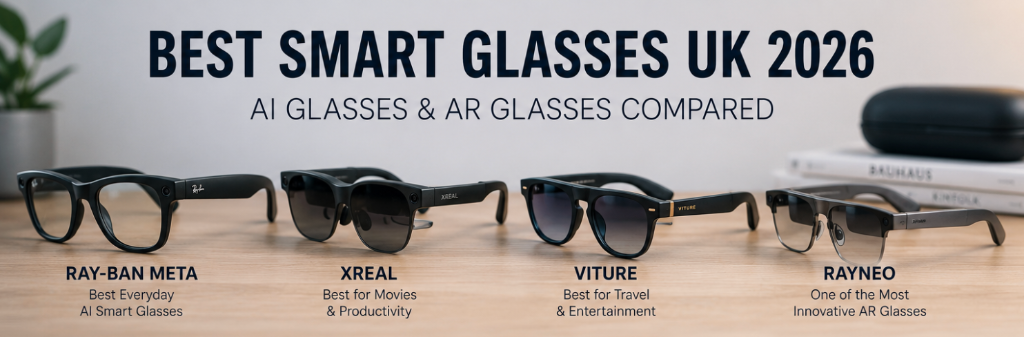
Ray-Ban Meta – Best Everyday AI Smart Glasses
The Ray-Ban Meta smart glasses are probably the closest thing right now to mainstream smart eyewear.
Unlike many earlier smart glasses, they look surprisingly normal. At first glance, most people would not immediately realise they contain cameras, microphones and AI features built directly into the frame.
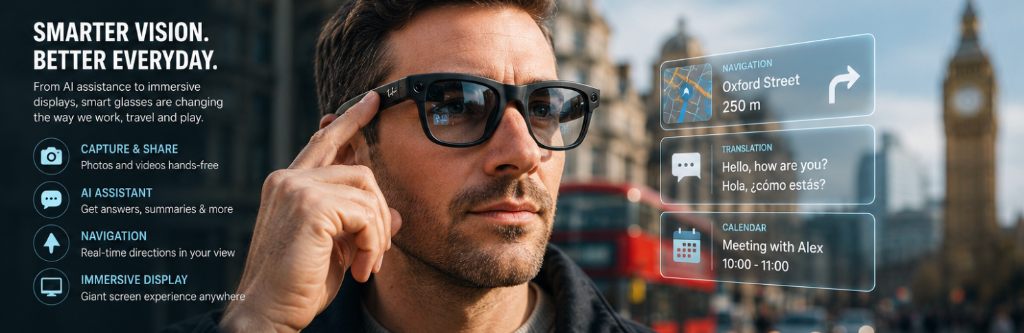
What makes them particularly appealing is that they feel much closer to ordinary lifestyle eyewear than traditional "tech products." You can listen to music, take calls, capture photos and videos and interact with AI assistants without carrying additional devices in your hands.
From an optical perspective, this category is especially interesting because products like Ray-Ban Meta are starting to blur the line between wearable technology and genuine everyday eyewear.
They are not perfect, however. Battery life still has limitations, and some users may underestimate how important frame fit and comfort become during prolonged daily wear.
XREAL – Best Smart Glasses for Movies & Productivity
XREAL has become one of the most recognised names in the AR glasses category, particularly for people interested in wearable displays.
These glasses are less about replacing normal eyewear and more about creating the experience of carrying around a giant portable screen.
For travel, flights and hotel use, they can actually feel surprisingly futuristic. Watching movies or working on a large virtual display while sitting on a train or plane is something that genuinely feels useful rather than gimmicky.
That said, products like XREAL introduce different optical considerations compared with AI smart glasses. Display positioning, visual comfort and prolonged viewing ergonomics become much more important when the primary function is immersive screen use.
Some users absolutely love this category, while others quickly realise they prefer more traditional wearable glasses.
VITURE – Best Smart Glasses for Travel
VITURE has positioned itself very strongly around portable entertainment and travel use, and in many ways these glasses make the most sense for people who travel frequently.
The overall experience feels polished and consumer-friendly, particularly for watching films, gaming or using a portable wearable display while away from home.
From an optometrist's perspective, comfort and weight distribution become especially important in products like these because users may wear them continuously for long viewing sessions.
This is where wearable display glasses still vary significantly between brands. Some feel refined and balanced, while others still feel slightly too heavy or awkward for prolonged use.
RayNeo – One of the Most Interesting AR Glasses Brands
RayNeo is becoming increasingly popular in the AR smart glasses market and is one of the more interesting brands currently pushing wearable display technology forward.
Their products sit somewhere between entertainment-focused AR glasses and more advanced wearable computing concepts.
What stands out most about the current generation of RayNeo products is how quickly the category is evolving. Compared with even a few years ago, the hardware is becoming noticeably more wearable and practical.
There are still compromises, of course. Outdoor visibility, prescription compatibility and long-term comfort remain important considerations across the entire AR glasses market.
But the pace of development is genuinely impressive.
Can Smart Glasses Replace Regular Glasses?
This is probably one of the most searched smart glasses questions online.
For some people, AI smart glasses such as Ray-Ban Meta may realistically become everyday wearable glasses. They already look relatively natural and integrate reasonably well into daily life.
AR display glasses are different. Most are currently better viewed as specialised wearable devices for entertainment, travel or productivity rather than full replacements for ordinary prescription eyewear.
Prescription compatibility also varies significantly between products. Some support direct prescription glazing, while others require insert systems positioned behind the display.
This is one reason why smart glasses should increasingly be discussed not simply as gadgets, but as optical products too.
Are Smart Glasses Worth Buying in 2026?
Honestly, that depends entirely on what you expect from them.
If you expect lightweight everyday glasses with useful smart features, some products are already surprisingly good.
If you expect perfect replacements for traditional eyewear with flawless augmented reality experiences, the technology is probably not fully there yet.
But one thing is becoming very clear: smart eyewear is improving rapidly. Frames are becoming lighter, displays are improving and the technology is starting to feel genuinely practical rather than experimental.
The category is moving much faster than many people realise.
Explore More Smart Glasses Reviews & Guides
You can explore more AI glasses reviews, AR glasses comparisons, prescription smart glasses guides, wearable display reviews and optometrist-led smart eyewear articles throughout The Smart Glasses Store website.
Sean Higgins
GOC Registered Optometrist · 20+ years clinical experience
Sean Higgins is a GOC-registered optometrist with over 20 years of experience. He assesses smart glasses from both an optical and wearability perspective — combining clinical expertise with wearable technology analysis.