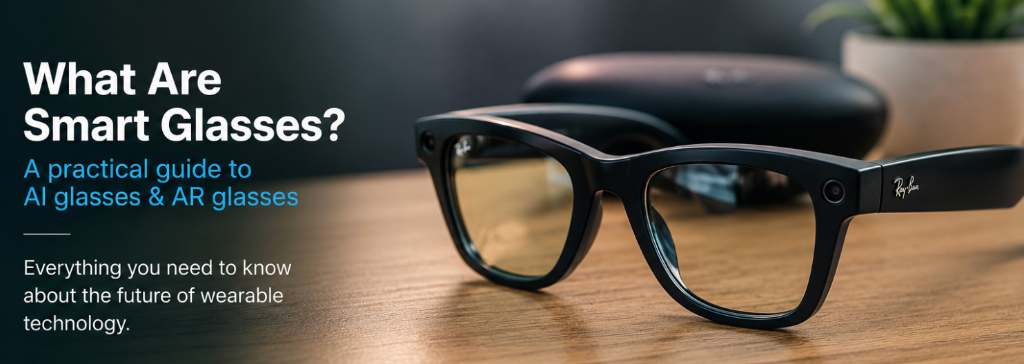
Smart glasses are everywhere at the minute. A few years ago they still felt futuristic and experimental, but products like Ray-Ban Meta, XREAL and VITURE have pushed smart eyewear much closer to the mainstream. Suddenly people are no longer just asking what smart glasses are — they are asking whether they should actually buy them.
As an optometrist, I've noticed a big increase in people asking about smart glasses recently. Some are curious about AI features and cameras, while others are interested in wearable displays for travel, gaming or productivity. But the questions I hear most often are surprisingly practical. Can they be fitted with prescription lenses? Are they comfortable enough to wear for long periods? Could they eventually replace normal glasses?
The answer depends entirely on the type of smart glasses you are talking about, because one of the biggest misconceptions right now is that all smart glasses are trying to do the same thing.
They are not.
Some products, like the Ray-Ban Meta glasses, are essentially everyday wearable glasses with smart features built into the frame. They focus more on things like audio, calls, photography and AI assistants while still trying to look and feel reasonably normal. Other products, particularly brands such as XREAL, RayNeo and VITURE, are much more focused on immersive wearable displays. These devices create the experience of having a large virtual screen floating in front of your eyes for movies, gaming, work or travel.
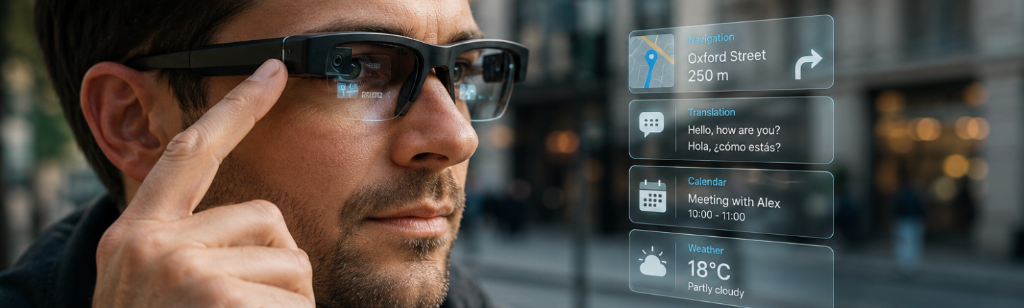
That distinction matters because many consumers buy smart glasses expecting one type of experience and end up receiving something completely different.
From an optical perspective, what makes this category particularly interesting is that smart glasses are no longer just technology products. They are increasingly becoming genuine wearable eyewear products. Once people start wearing these devices for hours at a time, factors like frame balance, weight distribution, prescription compatibility and long-term comfort suddenly become extremely important.
That is something many technology reviews barely discuss.
Comfort, for example, is hugely underestimated. A pair of smart glasses can have brilliant features and still end up sitting unused in a drawer because they simply feel uncomfortable after an hour. Even relatively small increases in frame weight can become surprisingly noticeable during prolonged use, especially around the nose bridge and temples. This becomes even more important with wearable display glasses where people may be watching films, gaming or working for extended periods.
Prescription compatibility is another area where there is still a lot of confusion. Some smart glasses can be glazed directly with prescription lenses, while others use separate prescription inserts behind the display system. Certain products work reasonably well for standard prescriptions but become more complicated for varifocal wearers or people with stronger prescriptions. Optical alignment also becomes much more important once displays are positioned in front of the eyes.
This is why I increasingly think smart glasses should be discussed not simply as gadgets, but as optical products too.
The technology itself is moving incredibly quickly. Some of the latest wearable display systems are genuinely impressive and would have sounded ridiculous only a few years ago. The idea of carrying around a giant private virtual screen while travelling, commuting or sitting on a flight is now becoming genuinely practical. AI integration is also improving rapidly, and it is fairly obvious that smart glasses are heading towards becoming far more mainstream over the next few years.
That said, current products still involve compromises. Battery life, outdoor visibility, frame weight and prescription support all vary significantly between devices. Some feel surprisingly polished already, while others still feel very much like early-generation technology aimed primarily at enthusiasts.
Personally, I think the most important thing is understanding what you actually want smart glasses to do. If somebody expects lightweight everyday glasses with a few useful smart features, they may love something like Ray-Ban Meta. If they are looking for immersive wearable displays for entertainment or productivity, they are probably looking at a completely different category of product altogether.
The line between traditional eyewear and wearable technology is becoming increasingly blurred, and that is what makes this space so interesting from an optometrist's perspective.
If you want to explore more guides, comparisons and optometrist-led reviews on AI glasses, AR glasses and prescription smart eyewear, you can browse the educational content throughout The Smart Glasses Store website.
Sean Higgins
GOC Registered Optometrist · 20+ years clinical experience
Sean Higgins is a GOC-registered optometrist with over 20 years of experience. He assesses smart glasses from both an optical and wearability perspective — combining clinical expertise with wearable technology analysis.