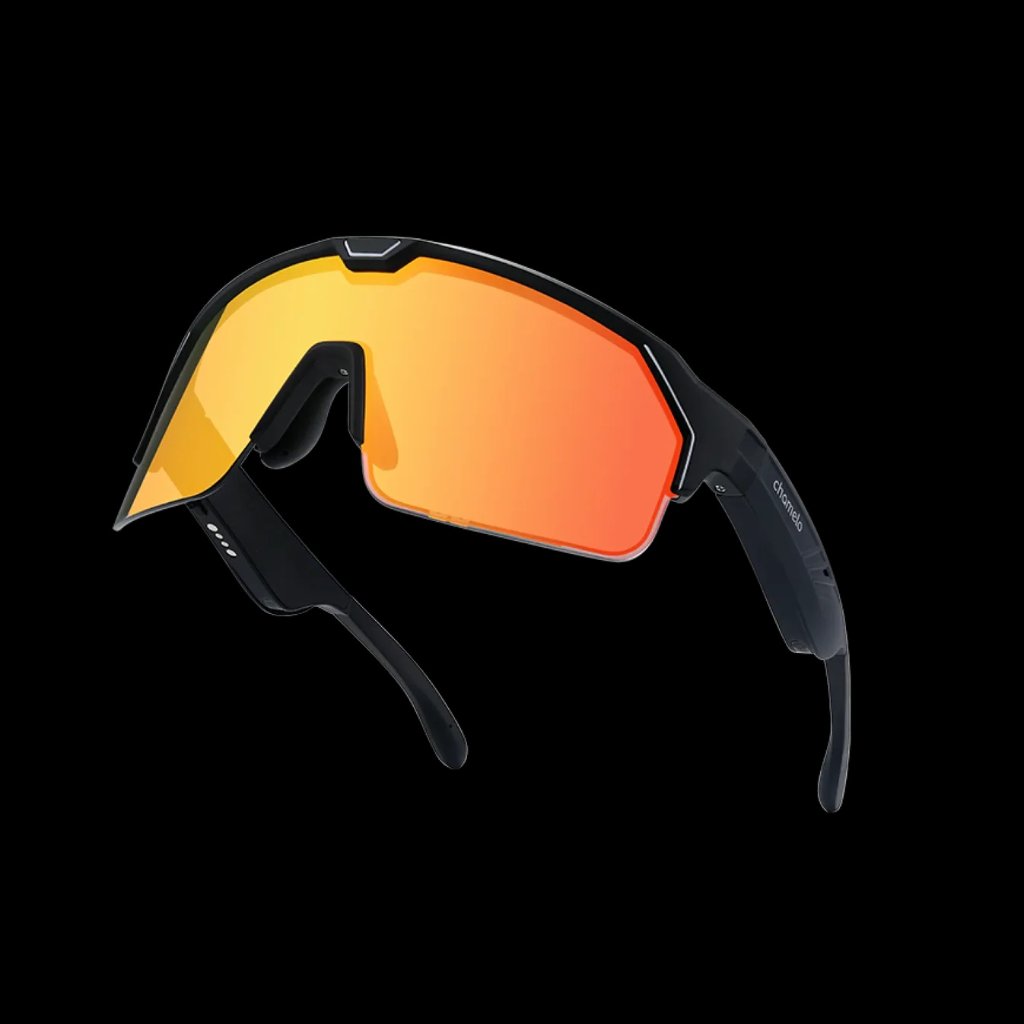
Chamelo Music Shield - view 1
Chamelo

Chamelo Music Shield

Optometrist Perspective - UK Registered

Research-based review by Sean Higgins

Audio sport sunglasses with manually adjustable electronic tint, without a camera or in-lens screen.

Audio Enabled
  • Manual tint adjustment
  • Wide outdoor coverage
  • Audio without a camera

Optical perspective · Published evidence and editorial interpretation

Sean’s optical assessment

By , GOC Registered Optometrist

My view

Choosing the tint yourself is the interesting part of Music Shield. I can see the appeal for outdoor use, but a prescription wearer needs a definite correction solution before buying. Check that first, then consider how the shield sits with your helmet and whether its lightest setting suits the conditions you use it in.

Manufacturer evidence and optical interpretation

Tint is not polarisation

Chamelo lists a light-transmission range of 17–63% and explicitly says Music Shield is not polarised. The control changes the amount of light passing through the lens; it is different from a polarising filter. Do not assume a darkened lens will handle reflected glare in the same way as polarised sunglasses.[1]

Independent evidence and optical interpretation

Prescription support is model-specific

The original Music Shield’s independent review reports no prescription-lens support. Prescription announcements for another Chamelo frame do not establish a route for this shield. I would not recommend buying it for corrected vision until a provider confirms the exact solution and how it fits behind or within the shield.[2]

Independent tests

What field testing says

Cybernews’ tester found the tint control useful during outdoor activity but noted potential nose-bridge discomfort with longer wear. Pack & Trail also identifies the need to charge the tint system. These are practical limitations to check during a trial, rather than reasons to assume it cannot suit you.[2][3]

Optical interpretation

My optical priorities

Try the lightest and darkest states in the conditions where you will use them, and ask what happens at low battery. I would check peripheral coverage, stable positioning and pressure with your usual helmet or hat. A 63% transmission setting still is not a fully clear spectacle lens.[1][3]

Optical pros & cons

A summary of the evidence and optical interpretation above.

Reasons to consider it

  • Manual tint adjustment
  • Wide outdoor coverage
  • Audio without a camera

Limitations to weigh up

  • Official FAQ says the lens is not polarised
  • No confirmed original-model prescription route
  • Fit and battery-dependent tint control need checking

Before choosing this pair

My fitting checklist

  1. Confirm the exact Music Shield generation.
  2. Try tint states and low-battery behaviour.
  3. Obtain a specific prescription answer if correction is needed.

Who I would shortlist it for

An outdoor wearer wanting manual tint and open-ear audio.

Where I would be cautious

Someone expecting polarisation or a confirmed conventional prescription lens route.

Technical Specifications

Audio

Bluetooth open-ear speakers

Lenses

Manual electronic tint; 17–63% VLT; not polarised

Display

No in-lens display

Research sources

The sources used for this assessment are linked below. Review dates and the exact model matter: software can change, and one frame’s fit does not establish another’s. Manufacturer information supports specifications and lens options; independent reviews describe the named tester’s experience. The prescription and fitting advice is my optical interpretation.

  1. Manufacturer

    [1] Chamelo — Music Shield tint and polarization FAQ
  2. Independent test

    [2] Cybernews — Nicholas Nabakwe, Music Shield field test
  3. Independent test

    [3] Pack & Trail — Music Shield sunglasses field review
How the optical interpretation is formed

The fitting checklist is an editorial interpretation, not a report that this pair has been physically fitted to you. Relevant checks include the prescription, lens positioning, frame stability and intended task. ABDO’s visual-discomfort guidance explains these general dispensing considerations.

Blue-light filtering or display certification is not treated here as proof of symptom-free use. Cochrane’s review of blue-light filtering spectacle lenses found no established short-term advantage for computer-related visual fatigue. This evidence concerns spectacle filters, not a clinical test of this smart-glasses model.

Read our review methodology