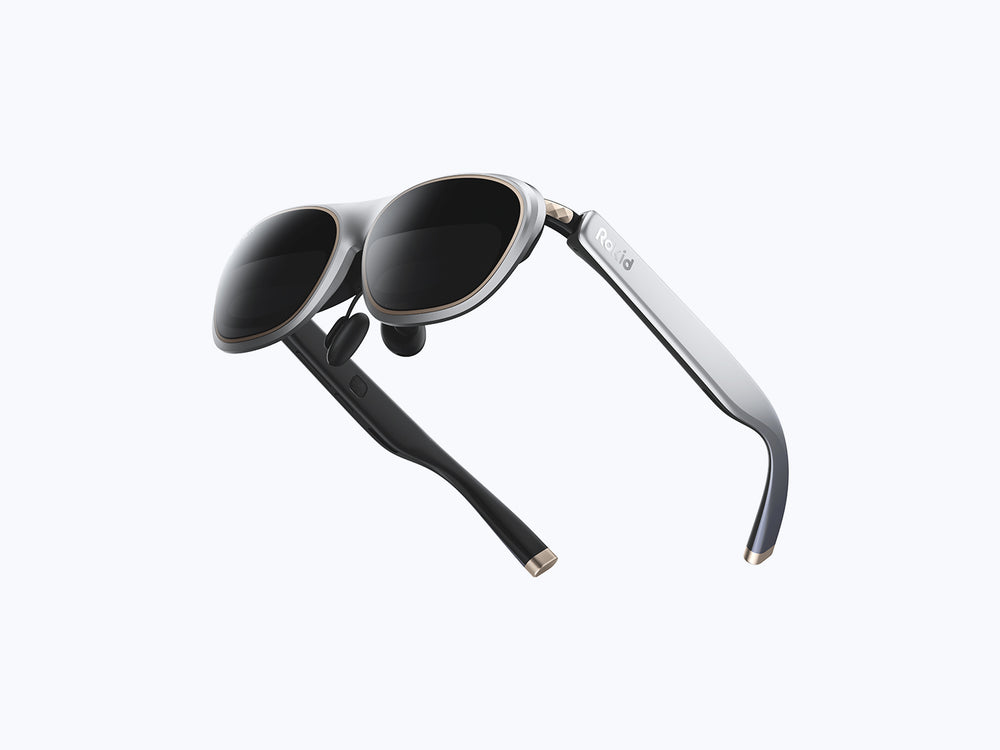
Rokid Max 2 - view 1
Rokid

Rokid Max 2

Optometrist Perspective - UK Registered

Research-based review by Sean Higgins

A personal entertainment display with independent spherical myopia adjustment and additional prescription solutions.

AR Display
  • Independent myopia adjustment to −6.0D
  • Additional prescription solutions documented
  • Reviewer reports comfortable media use

Optical perspective · Published evidence and editorial interpretation

Sean’s optical assessment

By , GOC Registered Optometrist

My view

The Max 2 is an interesting option for short-sighted people who want a screen for films or games. The focus dials may simplify things, but I would not assume they cover your whole prescription. Try the picture with both eyes and look at the corners before deciding whether you also need an insert.

Manufacturer evidence

What the focus dials can do

Rokid documents adjustment from 0.00 to −6.00D. It also explicitly directs users with astigmatism, long-sightedness or needs beyond the range towards additional prescription solutions. Those dials are therefore a useful spherical adjustment, not a universal replacement for corrective lenses.[1]

Optical interpretation

Insert choices and correction

Rokid says Max 1 prescription lenses can also fit Max 2, but I would still have the supplier confirm the exact carrier and your lens requirements. Check clarity with each eye and then the combined image. Turning the dials until text looks sharper cannot establish that the remaining cylinder or prism need is corrected.[1]

Independent test

What independent testing found

TechRadar’s Hamish Hector liked the myopia adjustment and comfort in media use, while criticising the lack of electrochromic dimming and middling audio. That is a balanced starting point for a trial. It does not establish that every wearer can obtain a clear corner-to-corner image or dispense with an insert.[2]

Optical interpretation

Ambient light and complete setup

The external lens and any shade determine how much competing light reaches the view. I would try it in your intended room or travel seat, and establish whether a Station or other accessory is needed. Screen brightness and environmental light control should be adjusted for a comfortable view, not simply maximised.[3][2]

Optical pros & cons

A summary of the evidence and optical interpretation above.

Reasons to consider it

  • Independent myopia adjustment to −6.0D
  • Additional prescription solutions documented
  • Reviewer reports comfortable media use

Limitations to weigh up

  • Dials do not correct astigmatism or hyperopia
  • No electronic dimming in the reviewed model
  • Bundle and accessory contents vary

Before choosing this pair

My fitting checklist

  1. Confirm sphere and cylinder before relying on the dials.
  2. Check the exact lens carrier and bundle.
  3. Try the complete screen in your intended lighting.

Who I would shortlist it for

A seated media user who benefits from the myopia controls and fits the optics.

Where I would be cautious

Someone expecting the dials to correct every prescription or provide electronic sun-lens dimming.

Technical Specifications

Connectivity

Compatible source; bundle contents vary

Lenses

Myopia adjustment 0.00 to −6.00D; additional Rx solutions

Display

Personal entertainment display

Research sources

The sources used for this assessment are linked below. Review dates and the exact model matter: software can change, and one frame’s fit does not establish another’s. Manufacturer information supports specifications and lens options; independent reviews describe the named tester’s experience. The prescription and fitting advice is my optical interpretation.

  1. Manufacturer

    [1] Rokid — Max 2 myopia adjustment and prescription solutions
  2. Independent test

    [2] TechRadar — Hamish Hector, Rokid Max 2 review
  3. Manufacturer

    [3] Rokid — Max 2 official information
How the optical interpretation is formed

The fitting checklist is an editorial interpretation, not a report that this pair has been physically fitted to you. Relevant checks include the prescription, lens positioning, frame stability and intended task. ABDO’s visual-discomfort guidance explains these general dispensing considerations.

Blue-light filtering or display certification is not treated here as proof of symptom-free use. Cochrane’s review of blue-light filtering spectacle lenses found no established short-term advantage for computer-related visual fatigue. This evidence concerns spectacle filters, not a clinical test of this smart-glasses model.

Read our review methodology