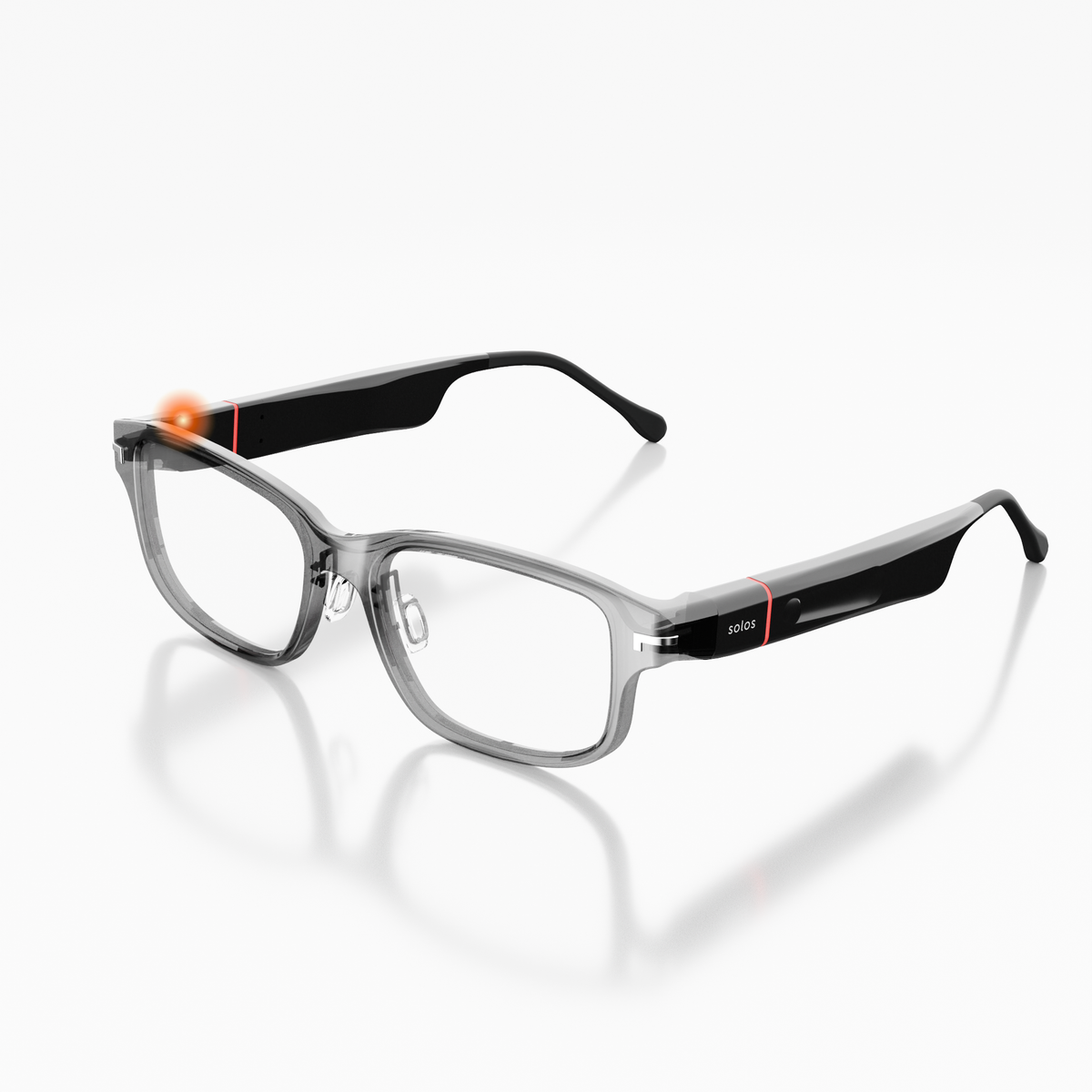
Solos AirGo 3 — Argon 7 - view 1
Solos

Solos AirGo 3 — Argon 7

Optometrist Perspective - UK Registered

Research-based review by Sean Higgins

A rectangular camera-free AirGo 3 audio frame, with a broader fitting profile and prescription lens options.

Prescription options — see assessment
AI Powered
  • No camera or projected screen
  • Custom prescription lens route
  • Frame-specific sizing guidance

Optical perspective · Published evidence and editorial interpretation

Sean’s optical assessment

By , GOC Registered Optometrist

My view

Argon 7 is worth looking at if you want camera-free audio glasses and need a wider frame. My first check would be the actual measurements and lens options. Then compare the older AirGo 3 platform with the newer Solos versions, rather than assuming every pair with the same brand name does the same job.

Manufacturer evidence and optical interpretation

Width is a selection criterion

Solos groups Argon 7 as L/XL and places it in the 142–144mm screw-to-screw front-width band. Check the measurement method rather than comparing the number directly with total external width. For a narrower head, a smaller Argon front may be more sensible than relying on temple pressure to hold this one.[1]

Manufacturer evidence and optical interpretation

Lens supply and the chosen front

The Argon 7 product page offers prescription and lens choices. Confirm the current order’s lens design, power limits, pupil measurements and remake arrangements. The fact that another Argon is sold with a particular branded sun lens does not establish what is supplied with Argon 7.[2]

Independent platform test

Independent platform review

Wareable’s 2024 AirGo 3 review questioned how essential the assistant and audio features felt in daily use, despite finding useful ideas. It is an older platform test rather than a current optical test of Argon 7. Firmware, app subscriptions and frame selection may have changed since publication.[3]

Optical interpretation

My optical assessment

With no display to align, I would focus on clear vision through the final lenses, bridge stability and comfort around the ears. Have any intended progressive lenses measured in the worn frame. Confirm hinge-generation and accessory compatibility rather than treating modularity as a promise that every Solos part fits every other one.[2][1]

Optical pros & cons

A summary of the evidence and optical interpretation above.

Reasons to consider it

  • No camera or projected screen
  • Custom prescription lens route
  • Frame-specific sizing guidance

Limitations to weigh up

  • Wide fit may not suit smaller faces
  • Older platform test cannot verify current software
  • Audio and AI value should be tested personally

Before choosing this pair

My fitting checklist

  1. Check the 142–144mm fitting band against a known-good frame.
  2. Confirm which lens and front are supplied.
  3. Check current app terms and component compatibility.

Who I would shortlist it for

A wider-fit wearer wanting camera-free audio and a prescription frame.

Where I would be cautious

Someone expecting a cinema screen, recording camera or unverified cross-generation modularity.

Technical Specifications

Connectivity

Phone and Solos app

Lenses

Custom lens options; L/XL fitting group

Camera

No photo/video camera

Display

No in-lens display

Research sources

The sources used for this assessment are linked below. Review dates and the exact model matter: software can change, and one frame’s fit does not establish another’s. Manufacturer information supports specifications and lens options; independent reviews describe the named tester’s experience. The prescription and fitting advice is my optical interpretation.

  1. Manufacturer

    [1] Solos — model-specific fitting guide
  2. Manufacturer

    [2] Solos — Argon 7 / AirGo 3 product and lens options
  3. Independent test

    [3] Wareable — Michael Sawh, AirGo 3 platform review (May 2024)
How the optical interpretation is formed

The fitting checklist is an editorial interpretation, not a report that this pair has been physically fitted to you. Relevant checks include the prescription, lens positioning, frame stability and intended task. ABDO’s visual-discomfort guidance explains these general dispensing considerations.

Blue-light filtering or display certification is not treated here as proof of symptom-free use. Cochrane’s review of blue-light filtering spectacle lenses found no established short-term advantage for computer-related visual fatigue. This evidence concerns spectacle filters, not a clinical test of this smart-glasses model.

Read our review methodology